History
Stay overnight in a listed half-timbered farm
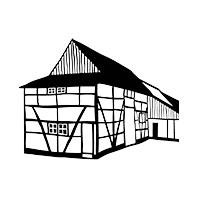
Hoeve Hurpesch is an ancient, typically South Limburg half-timbered farm and a listed monument. The history of the plot goes back to the 14th century.

The beginning
There once was a castle here
A castle once stood here, surrounded by a moat. The Klitserbeek that now flows past the farm still recalls it. A long time ago this was a working farm. The surrounding nature reserve is now owned by Natuurmonumenten, but was then part of the farm.
Through the centuries
The history of Hoeve Hurpesch
Castle Hurpesch stood on the east bank of the Geul, close to where the Klitserbeek flows into the Geul.
1325
The castle is mentioned as a fief, owned by Gilles van Horpesch.
16th century
The Van Wallum family owns the estate, which was then called Horpisch.
1696
Castle Hurpesch is demolished.
18th and 19th century
The present half-timbered farm is built.
1993
Archaeological research shows that the farm stood on an almost round island (a motte, about 50 metres wide), surrounded by a moat fed by the Klitserbeek.
2017 and 2021
Bart and Cecile restore the farm (2017) and ’t Bakhuisje (2021), with an eye for detail and sustainability.
Building style
Half-timbering
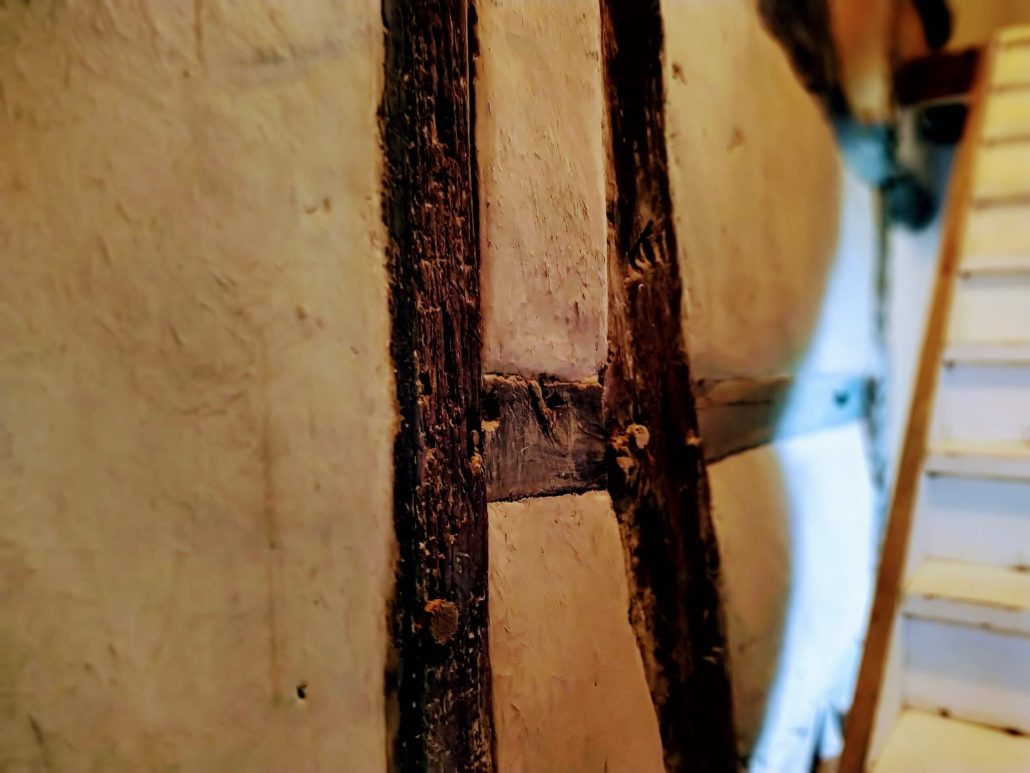
The typical black-and-white houses you find in many places in South Limburg: magnificent oak trusses and ancient wooden beams. The skeleton of a half-timbered house is made of wooden beams, and the panels are filled with a lattice of branches, straw and clay.
Until 1850 many houses in the Heuvelland were built this way. The materials were easy to find nearby, cheap and recyclable. Actually very sustainable, then.
Bakehouses
The Bakhuisje of vrouw Holle
You see many bakehouses (bakhuisjes) around here. They are small houses of which one part is a big oven, often at least 2 metres deep. The oven was fired for a whole day with bundles of branches (sjansen) up to 300 degrees or more. First loaves were baked in it, a few hours later (at 160 degrees) the vlaai, and finally the oven was used to dry apples, for example.
Bakehouses usually stood apart from the farms because of the fire risk, and were often shared by a whole hamlet. It was the same here: in the Bakhuisje of vrouw Holle, bread and vlaai used to be baked for the whole neighbourhood, and together.
Experience it yourself
Stay overnight in a piece of history
See whether your date is still free, or read more about our story.